

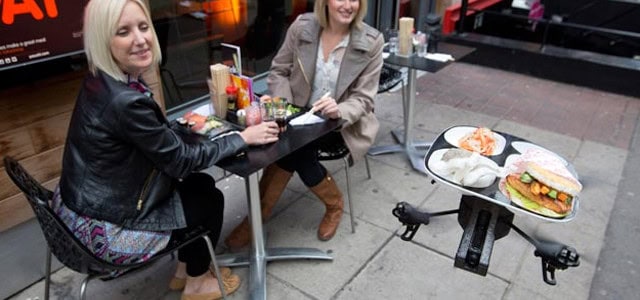
As drone delivery takes off in suburbs and cities, large chains and tech-savvy franchises are already investing in aerial logistics to reach customers faster. But what about small, independent restaurants? Can Main Street eateries compete in a market increasingly shaped by speed, automation and convenience? Sonoran Desert Institute (SDI), accredited by the Distance Education Accrediting Commission (DEAC), understands that with the right approach, local restaurants can absolutely participate in drone-based delivery by leveraging partnerships, understanding logistics and preparing for the unique demands of aerial fulfillment.
Drone delivery is not just a high-tech gimmick. It’s becoming a real option for last-mile logistics, especially for lightweight, time-sensitive and regionally distributed food orders. For small restaurants, it offers a chance to expand reach, cut delivery times and meet rising consumer expectations, without relying solely on costly delivery apps or vehicle-based drivers.
Why Drone Delivery Isn’t Just for Big Brands
It’s easy to assume drone delivery is out of reach for independent businesses. After all, major chains like Domino’s and Walmart are testing their drone fleets. However, third-party logistics firms are making this service accessible to smaller players by managing the infrastructure, airspace navigation and FAA compliance.
These drone delivery providers operate much like traditional delivery services, offering restaurants a platform to plug into, rather than requiring them to invest in drones themselves. For small restaurants, the key is to treat drone delivery as a partnership opportunity, not an ownership challenge.
SDI believes that restaurants don’t need to become drone experts. They just need to understand how the system works and how to integrate it effectively into their current operations.
Step One: Know Your Market and Delivery Area
Before pursuing drone delivery, restaurant owners should understand whether their location and customer base are a good fit. Most drone logistics providers operate within defined zones, often covering a three- to five-mile radius from their drone ports or mobile launch sites.
Restaurants in suburban neighborhoods, near residential communities or in small towns with light traffic have a real advantage. Drone deliveries in these areas can be quicker, more reliable and less likely to get held up by traffic or infrastructure issues.
Owners should ask:
- Is my customer base local and dense enough to justify frequent deliveries?
- Are my most popular menu items suited to quick, lightweight transport?
- Are customers asking for faster or more innovative delivery options?
These questions help determine if drone delivery aligns with the restaurant’s broader service goals.
Step Two: Choose the Right Drone Logistics Partner
Just as restaurants rely on third-party apps or local couriers, drone delivery works best when outsourced to an experienced provider. Companies specializing in last-mile aerial logistics offer managed services that include drone operation, packaging standards, flight planning and even app integration for order tracking.
When evaluating a potential partner, restaurants should consider:
- What is the provider’s FAA compliance track record?
- Does the provider offer route transparency and delivery confirmations?
- Are there packaging requirements or weight limits?
- How are temperature-sensitive foods handled during a flight?
Partnership agreements should clearly outline service zones, pricing, pickup protocols and customer service responsibilities.
Some logistics firms even offer software APIs that connect directly to the restaurant’s ordering system, allowing seamless transfer of order data to the drone platform. This integration helps streamline operations and reduce staff workload.
Step Three: Adjust Operations for Drone Compatibility
Drone delivery requires slight changes in how food is packaged and staged. Because drones are weight- and space-sensitive, orders must be compact, balanced and securely sealed. Some providers supply specific containers designed for aerial transport, often with insulation and vibration-reducing features.
Restaurants may need to:
- Limit drone orders to certain menu items that travel well
- Use standardized packaging for approved delivery flights
- Designate a staging area for drone pickup
- Train staff on pickup timing and packaging prep
The payoff is a reduced delivery window, often under 15 minutes from order to drop-off, which boosts customer satisfaction and brand reputation.
Step Four: Market the Experience
For small restaurants, offering drone delivery isn’t just about convenience. It’s also a branding opportunity. Customers are intrigued by new technology, and drone delivery creates a memorable experience that can drive word-of-mouth, social shares and repeat business.
Restaurants can promote drone delivery through:
- In-store signage and flyers
- Website banners or online ordering alerts
- Social media videos showing the process
- Loyalty programs tied to drone orders
Messaging should focus on benefits like speed, freshness and innovation, while also reassuring customers about safety, accuracy and the use of certified professionals.
Step Five: Start Small and Measure
Restaurants don’t have to overhaul their entire delivery model overnight. Many drone providers allow businesses to start with limited menus or delivery windows. This allows time to refine operations, gather customer feedback and measure success.
Metrics to track include:
- Delivery time vs. traditional delivery
- Order volume through the drone platform
- Customer satisfaction and repeat orders
- Cost per delivery compared to driver-based services
These data points help owners decide whether to expand drone offerings, negotiate better terms with partners or introduce additional efficiencies.
A Competitive Edge Without Breaking the Bank
Drone delivery may sound futuristic, but it is becoming a practical and cost-effective way for local restaurants to stand out. By partnering with the right providers and making small adjustments, Main Street businesses can gain access to the same tools used by major brands, without a heavy investment or complex logistics.
It’s not about owning drones or mastering aviation. It’s about understanding how to use drone logistics to serve more customers more efficiently, with fewer delays and less overhead.
The drone delivery landscape can continue to expand, especially in areas where traditional delivery services fall short. Small restaurants that position themselves early can not only keep up but potentially lead the way in how neighborhood dining meets next-gen delivery.
The Sky Isn’t the Limit, It’s the Opportunity
Drone technology is no longer confined to tech labs or corporate pilot programs. It’s available to small businesses to adapt, collaborate and reimagine what delivery looks like. For local restaurants looking to compete on speed, quality and experience, the sky is not just the limit, but it’s the next frontier.
